
Portable Medical Endoscopy System Design: Image Processing and OEM Development
inFor medical device OEM teams, developing a portable endoscopy system means bringing live imaging, scope controls, display, and recording into a device that fits the intended workflow. These requirements influence one another, shaping both platform selection and the development work that follows.
The Estone EN-150 combines an ARM SoC and FPGA architecture with an integrated display, dedicated scope interfaces, and video outputs. It gives OEM teams a reference platform for system evaluation and customization. Teams can assess scope adaptation, image processing, and application software against a common set of requirements, then identify which functions to retain, modify, or develop.
The workflow shapes the system
Bedside use, movement between rooms, and cart-based deployment place different demands on the device. Scope connections, illumination controls, image capture, and record export all affect the physical layout and operator interface. Mapping these activities early helps determine which functions belong in the host and which require external equipment.
Define responsibilities for the endoscope camera module, cable, illumination, and application software. If the project includes irrigation, suction, or other instrument controls, agree on the interfaces and supply scope. Translate the workflow into requirements for startup time, resolution, frame rate, end-to-end latency, and recovery after interruptions. These provide a basis for evaluating the complete endoscopic imaging system.
Endoscopy image processing with ARM and FPGA
Endoscopy image processing begins with the sensor. Signal format, timing, and cable characteristics affect acquisition and subsequent processing. Depending on the input, the image pipeline may include bad-pixel correction, noise reduction, color adjustment, gamma correction, sharpening, and overlays. Tuning should use the selected scope and illumination conditions to balance image clarity with the preservation of detail.
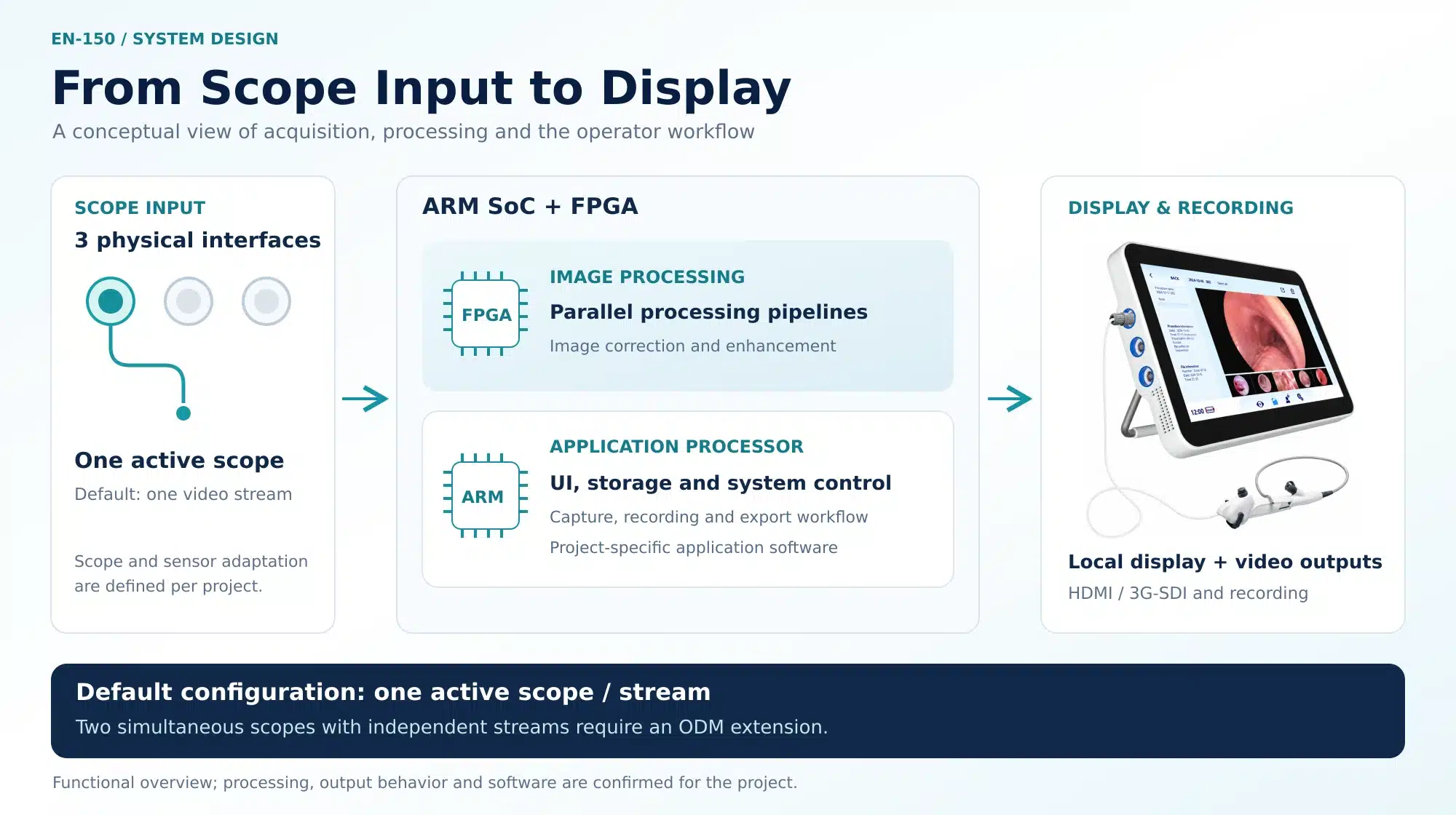
FPGA image processing can place suitable operations in parallel hardware pipelines, while the ARM application processor handles the interface, storage, and system control. This division allows OEM teams to define image-processing and application requirements separately, then evaluate how they perform together. For real-time image processing, the complete pipeline needs to meet the timing requirements of the intended workflow.
The EN-150 reference FPGA is the AMD Kintex-7 XC7K325T. Its documented image controls and enhancement functions are based on sample firmware; implementation and resource allocation need to be confirmed for the project. When evaluating an endoscopy video processor, measure latency across the complete path, including sensor readout, buffering, transfers, and display refresh.
Scope interfaces and application software
Interface planning should address both the scopes that can connect and the number that must operate at once. The EN-150 reference configuration provides three dedicated endoscope interfaces. By default, it supports one active scope and one video stream. Two simultaneous scopes with two independent streams require an ODM extension, with non-recurring engineering costs and a development schedule agreed for the project.
The reference configuration includes a 15.6-inch Full HD display, plus HDMI and 3G-SDI outputs specified at 1080p60. Local display, external display, and recording requirements determine image scaling, orientation, overlays, and output content. Physical output count and independent video-processing channels should be defined separately.
Application software connects these hardware capabilities to everyday operation. Screen layout, capture controls, file naming, storage notifications, and export should follow the intended workflow. Scope disconnection, interrupted recording, and full storage also need clear messages and recovery behavior. Estone’s software development services include custom applications and embedded OS and firmware development. The EN-150 project should separately define the required operating-system configuration, device interfaces, application functions, and acceptance criteria.
Power and mechanical design for portability
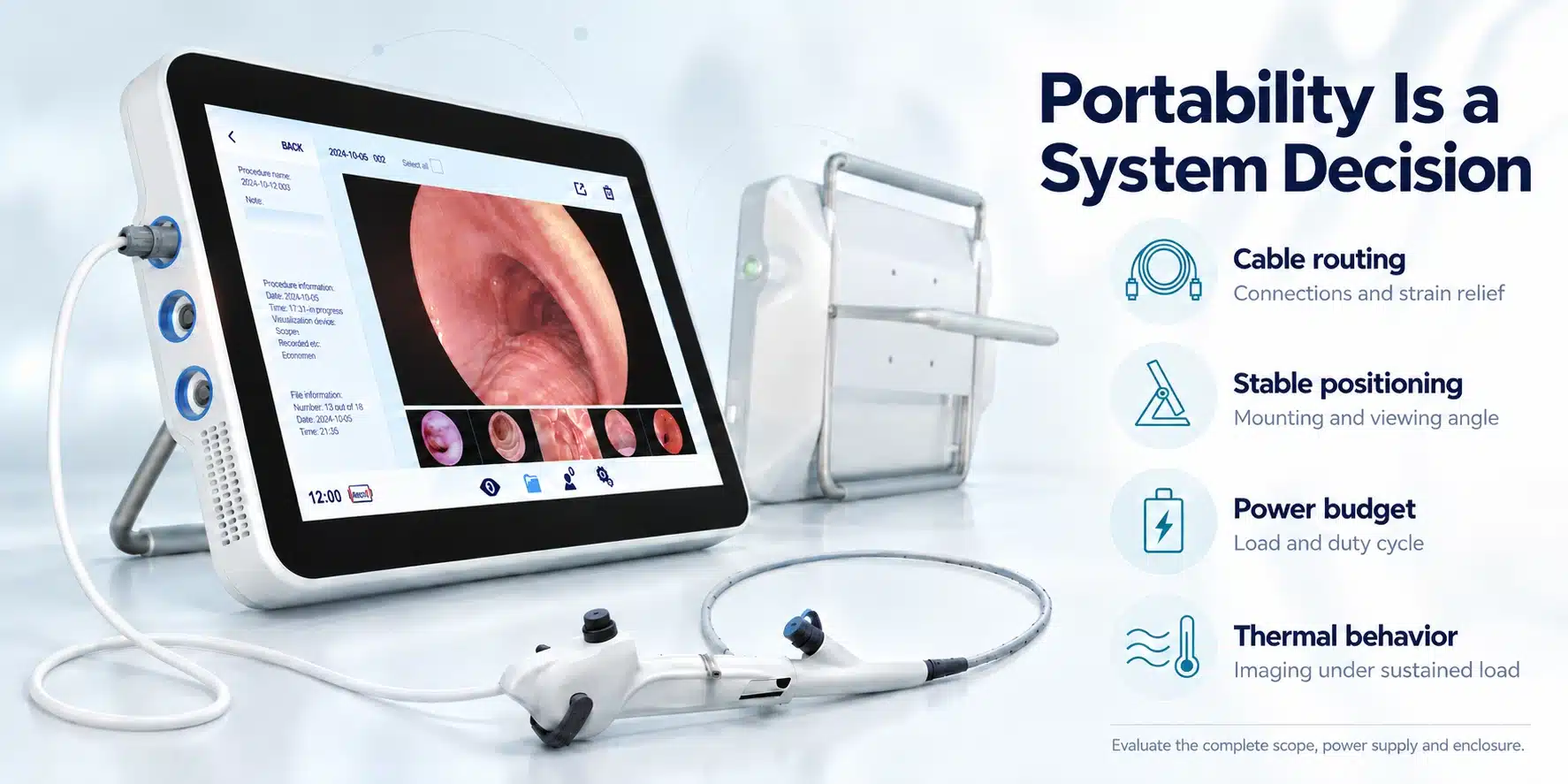
Portable operation depends on the complete setup, including scope cables, the power supply, mounting hardware, and illumination equipment. Connector placement, cable strain, stand stability, and service access affect handling and daily use. Cleaning methods and enclosure material compatibility should also reflect the intended application.
The EN-150 datasheet lists a 94 Wh battery. Actual runtime depends on display brightness, processing load, peripherals, and illumination power requirements, so it needs testing under the planned duty cycle. Low-battery warnings, charging behavior, and recovery after power loss belong in the same power-management plan.
Thermal evaluation should run imaging, recording, networking, and any planned AI workload together. Display or enclosure changes can affect system temperatures. Power, thermal, and mechanical requirements are therefore best evaluated together as part of medical embedded system development.
AI integration around a defined function
When AI is part of the product plan, define its role in the imaging workflow first. Image-quality assessment, workflow assistance, and clinical interpretation have different requirements for input data, response time, and supporting evidence. A clearly defined function guides the choice of execution hardware, model, and software.
Model evaluation should cover preprocessing, data transfers, inference, postprocessing, and display composition. It should also account for resource use while live imaging is running. Results must remain associated with the correct frame, with defined display behavior when inference is delayed or unavailable.
For an EN-150 project, AI is a separately scoped integration task. The project must establish the hardware, model, and verification responsibilities. Clinical applications also require evidence supporting the intended performance and claims of the finished product.
Validation of the complete product configuration
After reference-platform evaluation, testing should move to the project’s selected scope, illumination, firmware, application, enclosure, and power configuration. Image quality, frame continuity, and end-to-end latency need measurement under representative conditions. Recording, export, and optional AI functions should also be tested together under sustained load.
Disconnected inputs, low battery, exhausted storage, and interrupted recording help reveal whether the system provides the expected warnings and recovery behavior. Assign an owner and acceptance criteria to each test, and retain configuration versions so later changes can be checked against previous results.
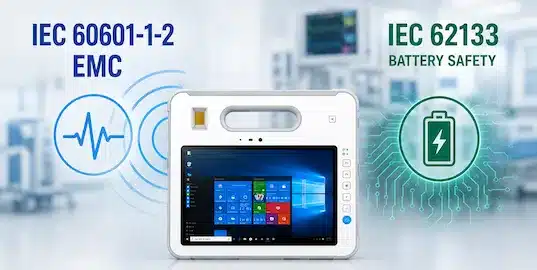
The EN-150 provides a platform basis for medical device development. The finished product’s safety, electromagnetic compatibility, usability verification, and certification or submission scope must be determined for the target market and project configuration.
ODM development with a defined customization scope
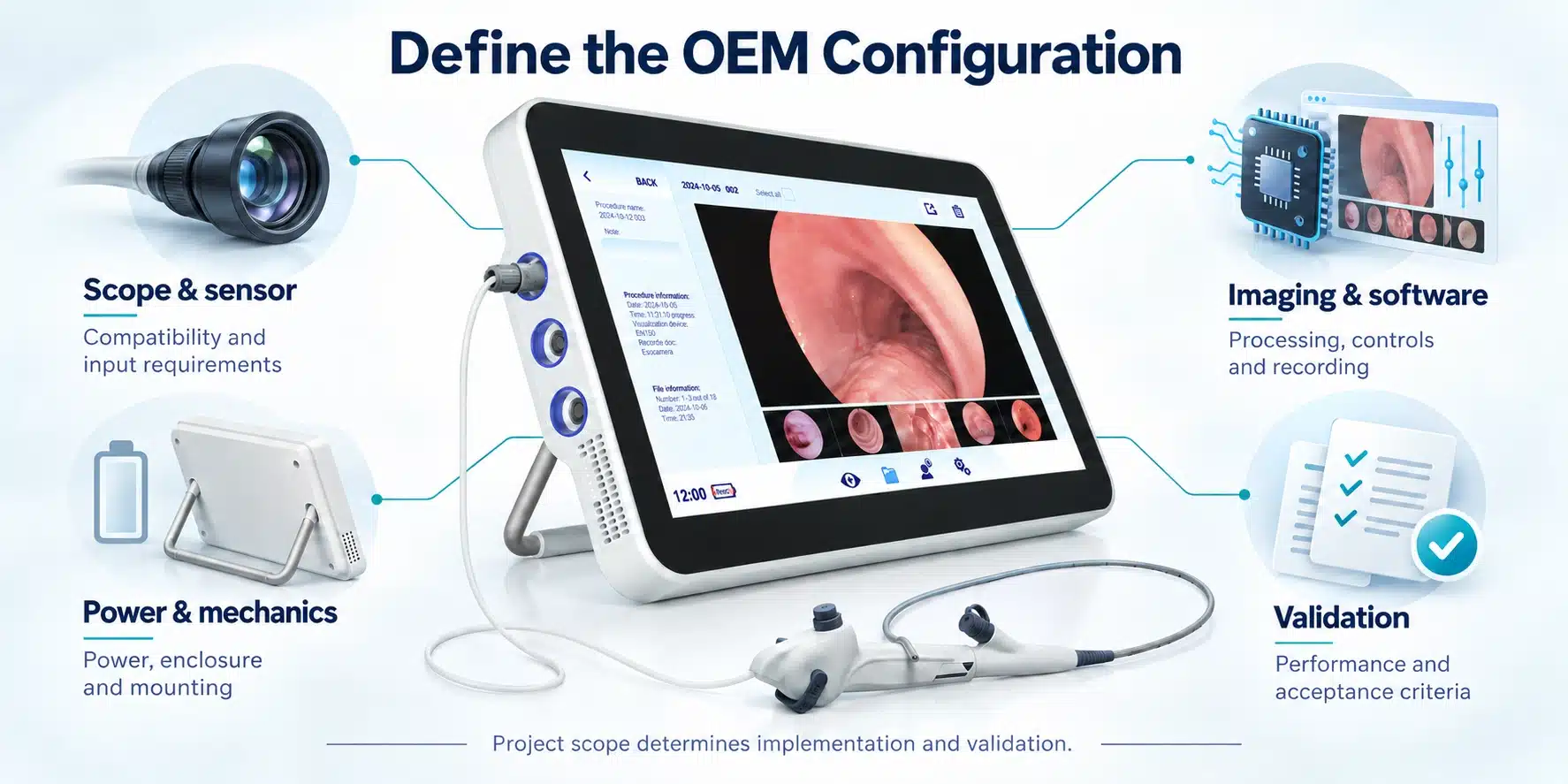
A reference platform gives OEM teams a concrete starting point for evaluating their product design. The EN-150 architecture and interfaces can be assessed against the target system, allowing teams to plan the sensor adaptation, FPGA changes, application software, and enclosure development required.
Defining the configuration, deliverables, and responsibilities early in an ODM engagement provides a basis for feasibility assessment and quotation. Changes to stream count, compute hardware, or display design need their own engineering and verification plans. Manufacturing test preparation, component lifecycle planning, intellectual property, and support for later changes should also form part of the project agreement.
If you are planning a portable medical endoscopy device, contact us to discuss your scope and sensor, the number of simultaneous video streams, display and recording workflow, and power and mechanical requirements. Sharing any planned AI functions, target markets, and project schedule will help us evaluate a suitable EN-150 configuration and define the next development steps.