

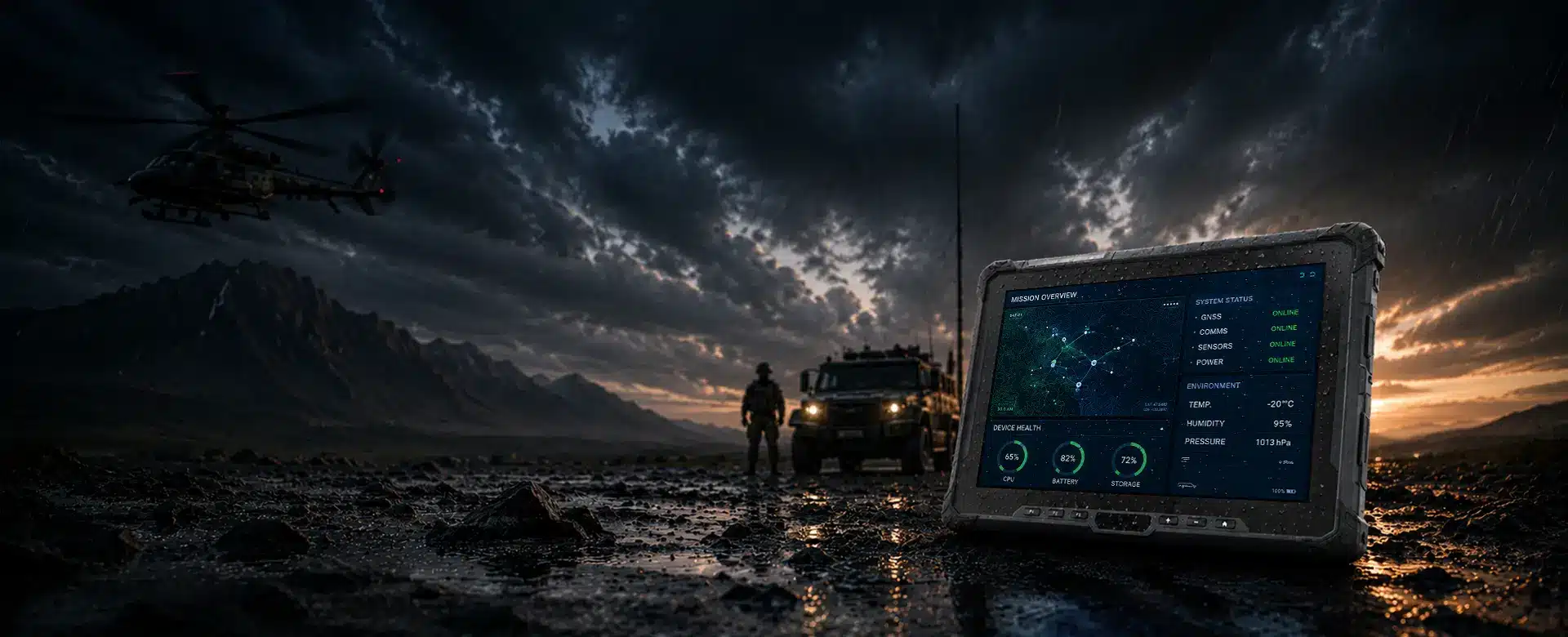
MIL-STD-810G/H
What is the MIL-STD-810 Standard?
MIL-STD-810 is the United States Department of Defense (DoD) standard for environmental testing of equipment to ensure its durability and reliability under various conditions. First introduced in 1967, the standard has undergone multiple revisions, making it a critical benchmark for military and commercial-grade rugged devices. Manufacturers of rugged tablets, including Estone Technology, adopt MIL-STD-810 to demonstrate the robust performance of their products in demanding environments.

MIL-STD-810G and MIL-STD-810H: The Key
The most commonly referenced version is MIL-STD-810G, released in 2008, followed by MIL-STD-810H in 2019. MIL-STD-810H introduced updated testing procedures and stricter criteria for various environmental conditions.
What is MIL-STD-810G?
Established in 2008, MIL-STD-810G is the global benchmark for environmental durability in ruggedized technology. It verifies that hardware can withstand extreme vibrations, thermal shock, and high-altitude pressure, ensuring mission-critical reliability in the field.
What is MIL-STD-810H?
The “H” in MIL-STD-810H denotes the eighth and most recent revision of the U.S. Military Standard, released to address more complex environmental stressors. The MIL-STD 810H is not just a single test; it is a comprehensive framework consisting of 29 distinct laboratory test methods.

A shift in drop test surfaces from plywood-backed concrete to steel-backed concrete.

An increase in the drop height from 4 feet to 5 feet for better real-world impact simulation.
Comprehensive Testing Methods
-
 Method 500 – Low Pressure (Altitude)
-
 Method 501 – High Temperature
-
 Method 502 – Low Temperature
-
 Method 503 – Temperature Shock
-
 Method 504 – Contamination by Fluids
-
 Method 505 – Solar Radiation (Sunshine)
-
 Method 506 – Rain
-
 Method 507 – Humidity
-
 Method 508 – Fungus
-
 Method 509 – Salt Fog
-
 Method 510 – Sand and Dust
-
 Method 511 – Explosive Atmosphere
-
 Method 512 – Immersion
-
 Method 513 – Acceleration
-
 Method 514 – Vibration
-
 Method 515 – Acoustic Noise
-
 Method 516 – Shock
-
 Method 517 – Pyroshock
-
 Method 518 – Acidic Atmosphere
-
 Method 519 – Gunfire Shock
-
 Method 520 – Temperature, Humidity, Vibration, and Altitude
-
 Method 521 – Icing/
Freezing Rain -
 Method 522 – Ballistic Shock
-
 Method 523 – Vibro-Acoustic/
Temperature -
 Method 524 – Freeze / Thaw
-
 Method 525 – Time Waveform Replication
-
 Method 526 – Rail Impact
-
 Method 527 – Multi-Exciter
-
 Method 528 – Mechanical Vibrations of Shipboard Equipment (Type I – Environmental and Type II – Internally Excited)
Drop Test Standards Ensuring Ruggedness
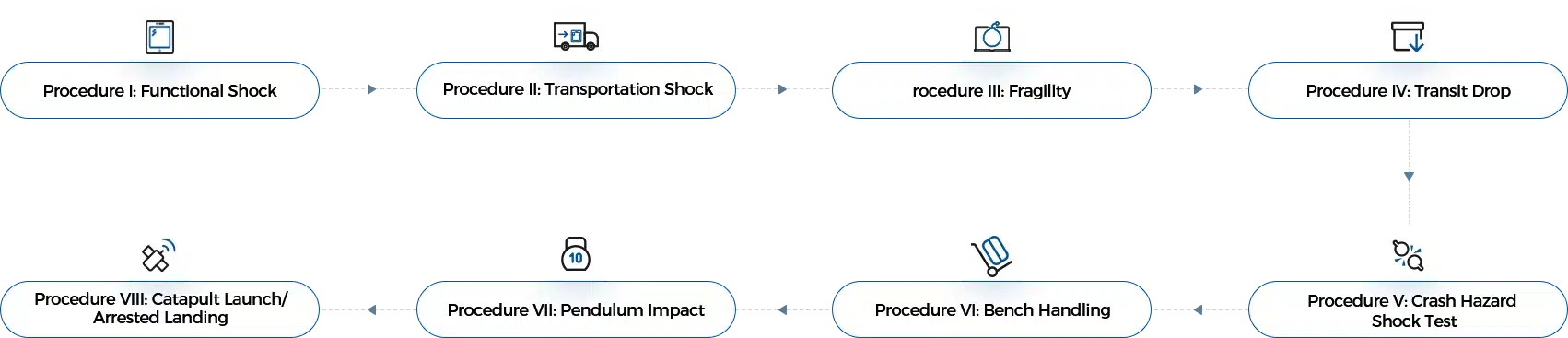
The drop test, a key component of MIL-STD-810, falls under Method 516. This is part of the shock test which has 7 different procedures:
Procedure I: Functional Shock MIL-STD 810 evaluates if the system remains operational and survives shock events encountered during its normal working life.
Procedure II: Transportation Shock Assesses how the device responds to repetitive shocks in transport environments, such as ground vehicle movement.
Procedure III: Fragility Used by OEM/ODM engineers to identify the specific shock levels that cause structural failure, helping refine protective packaging per MIL-STD guidelines.
Procedure IV: Transit Drop The standard mil std drop test. It certifies if a device survives 26 accidental falls from heights up to 5 feet (MIL-STD 810H) onto hard surfaces.
Procedure V: Crash Hazard Shock Test Verifies that equipment mounted in vehicles or aircraft stays securely attached during a crash to prevent injury, as defined under MIL-STD-810.
Procedure VI: Bench Handling Simulates the physical impacts a device might face on a workbench during maintenance, repair, or packaging.
Procedure VII: Pendulum Impact Evaluates the resistance of large, heavy shipping containers to horizontal impacts during mechanized handling, per MIL-STD-810G 516.6 drop height standards.
Procedure VIII: Catapult Launch / Arrested Landing Specifically tests hardware installed in fixed-wing aircraft for the extreme shocks of naval aviation takeoff and landing.
MIL-STD-810G Drop Test (2008-2019)
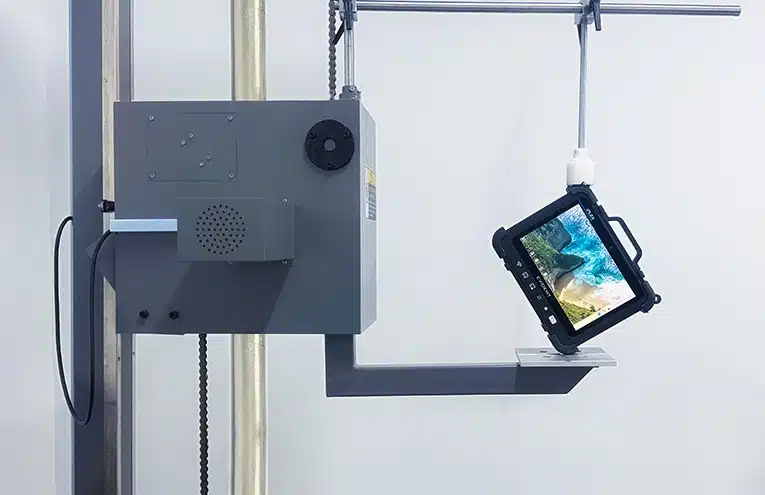
Procedure IV: Devices are dropped from 4 feet onto plywood-backed concrete.
Test Coverage:26 drops covering all faces, edges, and corners. Specifically, the MIL-STD-810G protocol simulates the rigors of logistical handling and field use. This comprehensive 810g drop test covers 26 drops across all faces, edges, and corners to ensure mission-critical reliability. Under Procedure IV (Transit Drop), equipment must remain fully operational after a series of impacts from a MIL-STD-810G drop test height of 4 feet.
MIL-STD-810H Drop Test (2019 and Beyond)
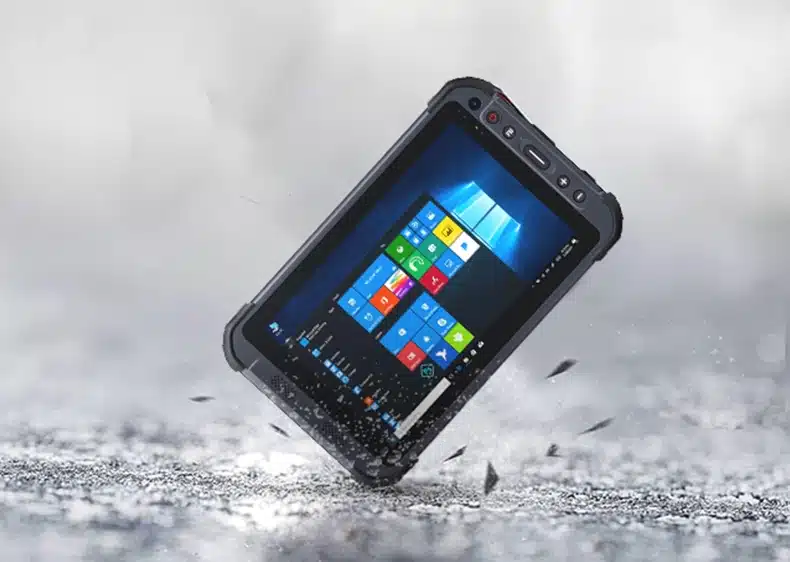
Updated to a 5-foot drop onto steel-backed concrete for more rigorous evaluation. MIL-STD 810H introduces a more rigorous evaluation framework through the “Mission Profile” concept, tailoring tests to real-world operating environments.
Key upgrades from the previous MIL-STD-810G 516.6 include:
• Increased Drop Height: The standard mil std drop test height has been elevated to 5 feet (152 cm) to simulate extreme accidental falls from high-altitude platforms or medical carts.
• Stricter Impact Surface: Testing has shifted toward steel-backed concrete, which transfers maximum impact energy to the device, ensuring superior structural integrity.
• Expanded Procedures: The MIL-STD 810H now encompasses 8 procedures, adding specialized protocols like Catapult Launch/Arrested Landing for naval aviation. While the drop test is one of the most widely recognized procedures, manufacturers like Estone Technology often conduct additional tests, such as humidity (Method 507) and altitude (Method 500), to ensure our MIL-STD-810H certified rugged tablets meet specific use-case requirements.
Rugged Tablet PC Platforms
The following is a list of Estone Technology rugged military grade tablet ODM platforms:
| Drop Rating | MIL-STD-810G, 4ft to Plywood |
| Shock Rating | MIL-STD-810G, Method 516.6 |
| Vibration Rating | MIL-STD-810G, Method 514.6 |
Estone Technology: MIL-STD-810 Certified Rugged Computing Solutions
We hope this technical overview provides a comprehensive understanding of the MIL-STD-810 standard and its critical role in safeguarding mission-critical hardware and data.
As a technical leader with over 20 years of expertise, Estone Technology focuses on the engineering and manufacturing of high-performance, MIL-STD-810-certified solutions. Our specialized portfolio includes:
• Rugged Tablet PCs for industrial and military-grade applications
• Ground control stations built to military standards for defense and UAV operations
• Medical grade tablet PCs for healthcare environments
• Industrial panel PCs for control and automation systems
Contact us today to discuss how Estone Technology engineers and certifies high-performance rugged tablets and computing systems to meet MIL-STD-810 and other stringent industrial requirements.
FAQs
MIL-STD-810H is the latest and most comprehensive version of the United States Military Standard. Released in 2019 to succeed MIL-STD-810G, it remains the active benchmark for environmental engineering and laboratory testing as of 2026.
Beyond simple durability, MIL-STD-810 certification provides three core technical benefits:
1. Reliability in Extreme Conditions: Ensures mission-critical hardware survives in clinical, industrial, or outdoor environments without failure.
2. Lower Total Cost of Ownership (TCO): Rugged devices have a significantly longer lifecycle and lower failure rate compared to consumer-grade hardware.
3. Risk Mitigation: For industries like healthcare and defense, certification ensures that hardware meets the rigorous safety and performance standards required for high-stakes operations.
MIL-STD-810 does not define a single universal temperature range. Instead, it provides a testing framework where equipment is certified based on its intended deployment environment. Most rugged devices, such as those from Estone Technology, are typically tested to withstand operating temperatures from -20°C to 60°C (-4°F to 140°F), though these limits can be "tailored" for more extreme conditions.
The primary difference lies in the scope of testing. An IP rating (Ingress Protection) measures a device’s resistance to solid objects (dust) and liquids (water). In contrast, MIL-STD-810 covers a much broader range of environmental stressors, including vibration, mechanical shock, extreme temperatures, and altitude. While an IP65 tablet is "water-resistant," it may not survive the constant vibration or thermal shock that a MIL-STD-810 certified device is engineered to endure.
Not necessarily. MIL-STD-810 includes specific testing procedures for rain (Method 506.6) and immersion (Method 512.6), but being "MIL-STD-810 certified" does not automatically mean a device is fully waterproof. Certification is "tailored" to the device's intended use. At Estone Technology, our rugged tablets often combine MIL-STD-810 durability with IP65 or IP67 ratings to ensure complete protection against both environmental stressors and water ingress.
The primary difference is their focus: MIL-STD-461 governs Electromagnetic Compatibility (EMC), while MIL-STD-810 focuses on Environmental Durability. In short, MIL-STD-461 ensures a device’s electronics don't interfere with other systems, while MIL-STD-810 ensures the device survives physical stressors like drops, heat, and vibration. Estone Technology provides hardware that can be certified to both standards depending on project requirements.
The primary difference lies in their target application: MIL-STD-810 is a U.S. Military standard for broad ground and combat equipment, while DO-160 is a commercial aviation standard specifically for airborne equipment. While both test for environmental durability, DO-160 focuses heavily on the unique pressures, RF interference, and safety requirements of flight.

